

A Practical Guide to Developer-First Content
Developer-first companies don’t get to rely on traditional marketing signals. If the content doesn’t instantly feel useful, developers leave. They don’t reward hype, or generic tutorials that could apply to anyone. They reward insight that makes them better at what they do.
That was one of the sharpest themes that came through in our conversation with Shantanu Das, Founder of InfraSity - a DevOps engineer who now helps DevTool companies write content that developers actually engage with. His core belief: content is the first proof of value for a DevTool product.
This guide captures the most tactical takeaways from that discussion.
Developers judge credibility in the first scroll
Developers land on content with a clear intent - they’re stuck, evaluating a better approach, or exploring a workflow that could save them time. They aren’t browsing casually. They’re scanning fast to see if you understand their use case.
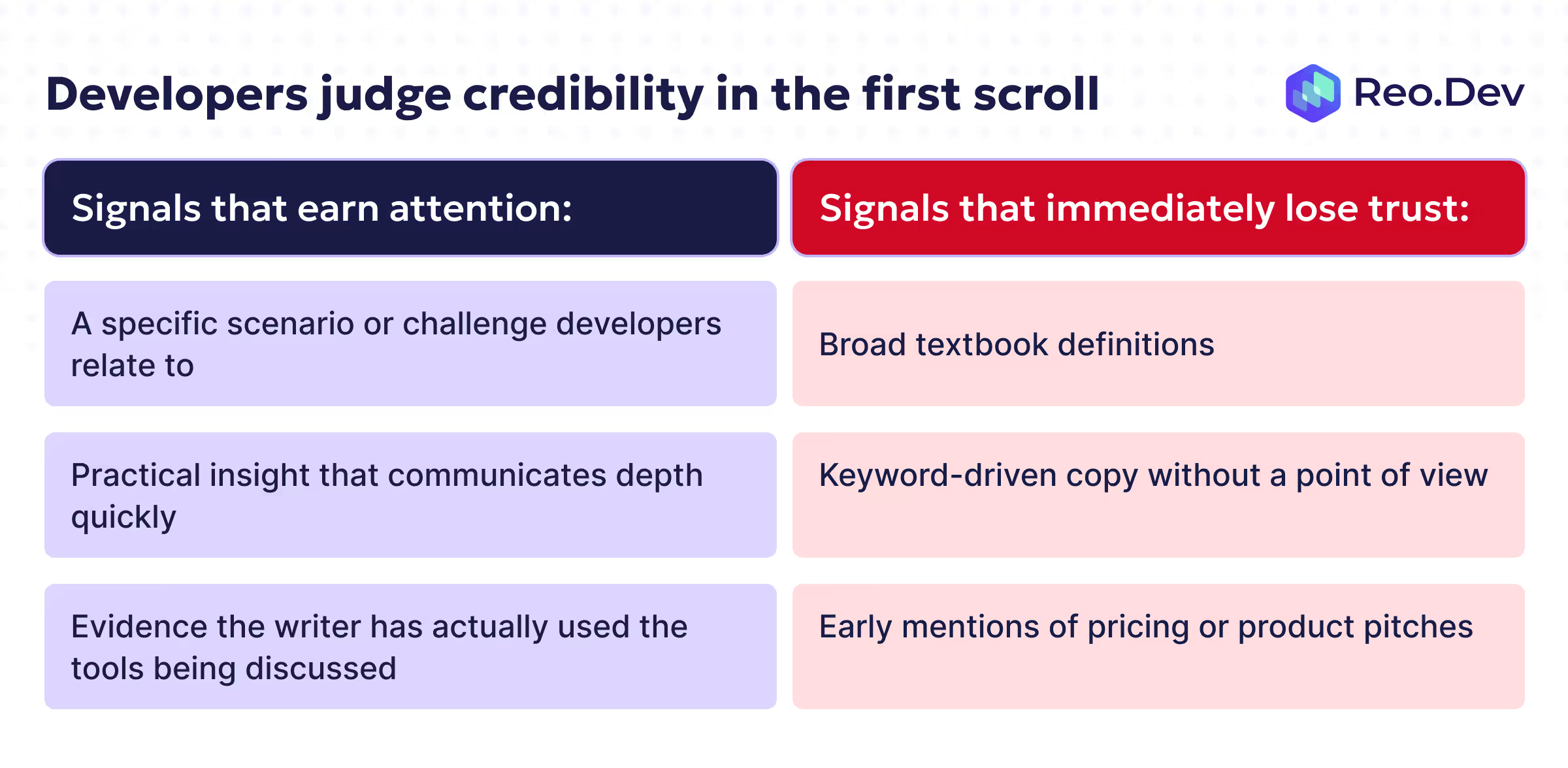
The job of the opening is simple: prove that reading further will be worth it.
When that connection is made early, developers are willing to keep learning with you.
Structure content the way developers learn
One tactical framework Infrasity uses is based on a well-known documentation model often referenced in engineering teams: Diátaxis’. It recognizes that developers do not read content in a linear way.
They jump between different learning modes:
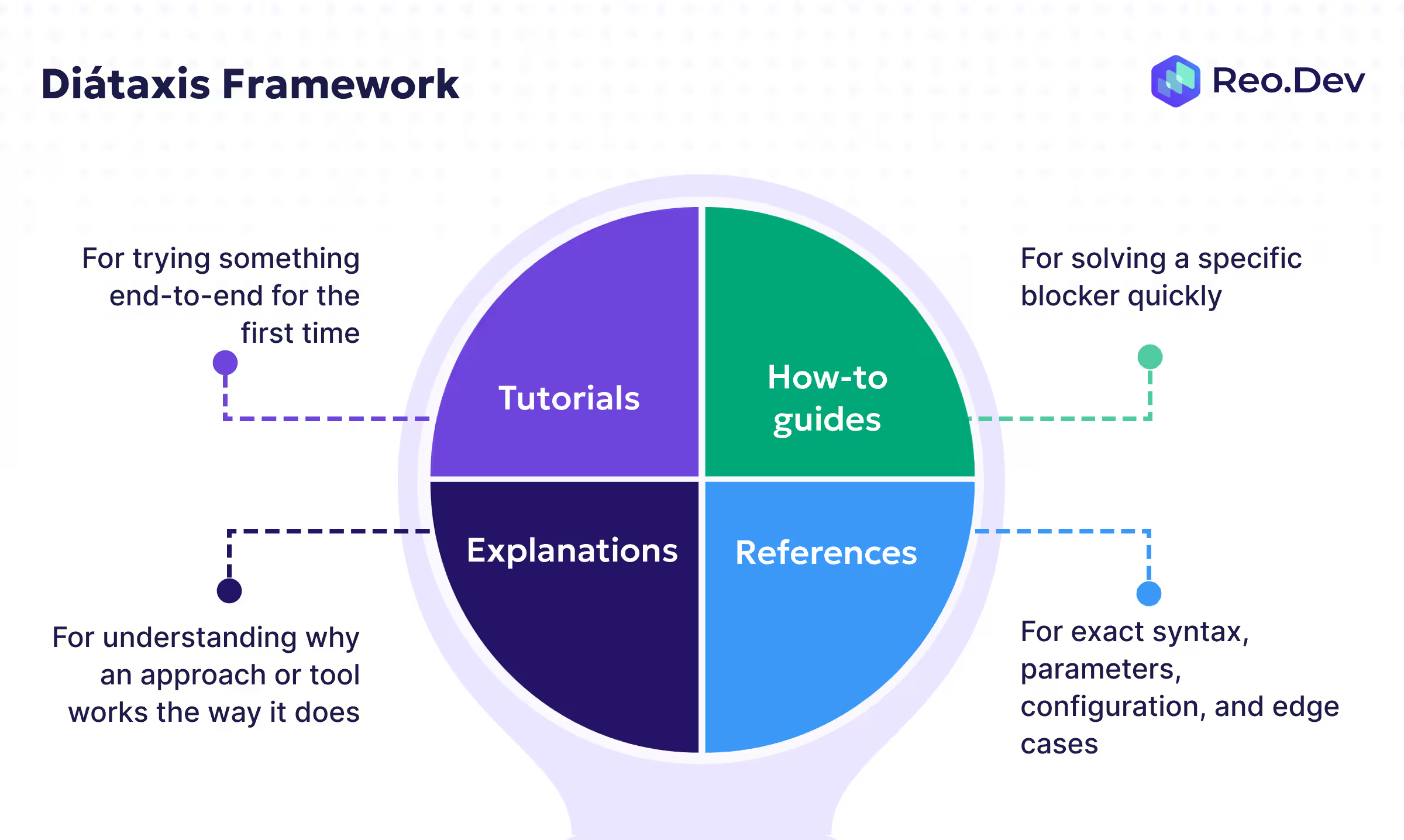
A healthy DevTool content system includes all four, intentionally layered across the user journey. Too many teams only invest in tutorial-style content. Tutorials help discovery, but they do not help developers decide.
Optimize for AI-first discovery
Developer search behavior is changing fast. Increasingly, developers ask AI tools before they ask Google. And AI assistants pull answers from content that is structured clearly enough to extract.
Optimizing for that consumption means:
- Adding a helpful TLDR with the core takeaway or solution
- Using clear headings that map to intent-based queries
- Including concise FAQs that answer real questions directly
- Placing code examples and implementation value early
Infrasity also republishes trimmed versions of content on dev.to and Medium - two sources Large Language Models often reference. Visibility in those ecosystems now influences how developers discover tools tomorrow.
Being AI-readable has become as important as being SEO-friendly.
Credibility Is Earned in Conversation
Trust is built in communities, not pushed into them.
Infrasity focuses on Reddit and LinkedIn because that’s where technical conversations already live. But the approach is never distribution for distribution’s sake.
Instead:
- Join discussions developers are already having
- Share guidance that solves real pain
- Bring credibility from hands-on understanding
Developers reject content that feels like a disguised pitch. They reward content that helps them do their job better, even if they don’t click anything today.
That positive association is the long-term brand memory DevTools need.
Measure trust before conversion
Developer content doesn’t create an instant pipeline. It creates qualified belief.
Infrasity focuses on metrics that signal growing trust:
- Returning visitors on technical content
- Increased depth of reading or scroll behavior
- Attention shifting toward evaluation-oriented topics
- Repeated entry points through organic and community channels
Signups follow only after developers feel confident that your team understands the real-world problems they face. Trust is the leading indicator. Demand is the lagging outcome.
Content becomes the first moment where that understanding is proven. It is where a developer decides whether your product fits their world, their workflows, and their mental models.
If your content respects their time, delivers practical value and connects to how they already build and think then trust forms. And where trust forms, demand follows.
That is the shift DevTool companies must embrace:
Developer-first content isn’t a marketing checkbox, it is the engine of credibility that drives product adoption.